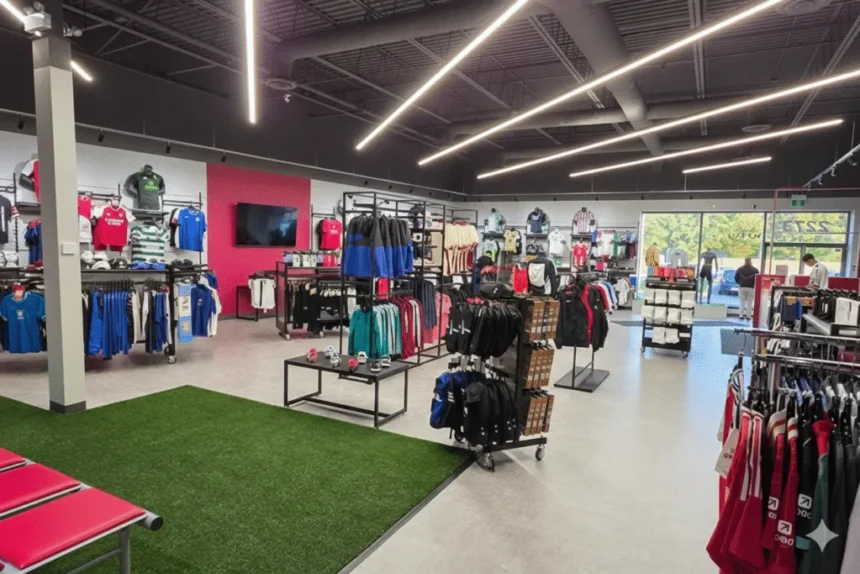
In today’s competitive retail landscape, sports apparel stores must do more than simply stock high-quality gear, they must present it in ways that captivate customers, improve store flow, and adapt to changing collections. One powerful solution that forward-thinking retailers rely on is the modular Multisystem fixture, a flexible display system that enhances merchandising while simplifying store updates.
Modular retail fixtures, particularly Multisystem systems, are engineered to be adaptable, scalable, and highly customizable, ideal for showcasing everything from seasonal athletic wear to year-round staples like hoodies, sneakers, and performance accessories. These systems help sports retailers create visual merchandising that not only showcases products effectively but also enhances the overall shopping experience.
Why Modular Fixtures Matter for Sports Apparel Retail
Sports retail environments are constantly evolving. New seasonal releases arrive, promotional collections rotate, and trends shift rapidly. Traditional static fixtures can make store updates costly and time-consuming. Modular systems solve this challenge by offering interchangeable components that can be reconfigured without major structural changes.
This flexibility allows merchandisers to:
- Change layouts quickly for new product launches or seasonal promotions
- Highlight diverse merchandise types, apparel, footwear, and accessories, within one cohesive display
- Maximize product visibility and accessibility, improving the overall shopping journey
Modern Multisystem fixtures function like a customizable toolkit. Components such as uprights, shelves, faceouts, hangrails, and hooks can be combined and rearranged to support different merchandising strategies. Whether creating perimeter wall displays, freestanding gondolas, or feature islands, modular systems provide the versatility needed in athletic retail environments.
Key Benefits of Multisystem Fixtures in Athletic Retail
1. Adaptability to Changing Merchandise
Sports apparel retailers need to pivot quickly. With Multisystem fixtures, store teams can swap accessories or reposition shelves to support evolving product assortments. Introducing a new sneaker drop? Add angled shelves or spotlight displays. Launching a limited-edition performance collection? Expand faceout capacity instantly.
Because the system is modular, retailers avoid the expense and downtime associated with replacing entire fixtures. Instead, they enhance and adjust what they already have, saving both time and resources.
2. Scalable Solutions for Any Store Size
From small specialty sports boutiques to expansive flagship stores, Multisystem fixtures scale seamlessly. Retailers can begin with a basic wall configuration and expand into floor displays, promotional endcaps, or integrated accessory zones as needed.
This scalability also supports brand consistency across multiple store locations. A retailer can maintain a uniform design language while adapting layouts to suit different floor plans or regional preferences.
3. Improved Space Optimization
Sports stores often carry a broad mix of products, from apparel and footwear to bags, caps, and training accessories. Modular fixtures maximize vertical and horizontal space efficiently, allowing retailers to increase display capacity without overcrowding.
By utilizing adjustable heights and interchangeable attachments, retailers can create high-density displays that remain visually clean and organized. This balance is critical in sports retail, where clarity and accessibility directly influence buying decisions.
4. Enhanced Visual Merchandising & Storytelling
Effective retail is about more than function, it’s about storytelling. Multisystem fixtures give retailers the freedom to craft visually compelling displays that reflect athletic energy and brand identity.
Adjustable shelving, varied merchandising angles, and flexible accessory combinations make it easy to build thematic zones, such as training essentials, running gear, or seasonal collections. These curated spaces guide customers naturally through the store and encourage product discovery.
Dynamic displays also increase engagement time, which can lead to higher conversion rates and stronger brand perception.
Practical Applications in Sports Apparel Stores
Seasonal Transitions
Sports retailers frequently rotate collections throughout the year. Modular fixtures simplify these transitions. Summer training gear can be replaced with fall performance wear by adjusting hangrails, swapping shelf placements, and reorganizing display heights, all without dismantling the core system.
Footwear Feature Walls
Sneakers are often a focal point in athletic retail. Multisystem configurations support angled shelves, spotlight panels, and layered presentations that showcase premium styles. These adjustments help create visual hierarchy and direct customer attention toward high-margin products.
Integrated Accessory Displays
Caps, gloves, bags, and smaller athletic accessories require different presentation methods than apparel. Multisystem fixtures support hooks, bins, and adjustable shelves within the same framework, allowing retailers to present cross-category assortments cohesively.
How Displetech Supports Sports Retail with Multisystem Solutions
For sports retailers seeking durability, flexibility, and professional design, Displetech offers comprehensive Multisystem fixture solutions tailored to apparel environments.
Displetech’s modular systems include perimeter wall displays, gondolas, and a wide range of customizable accessories that accommodate apparel, footwear, and accessories within one cohesive structure. These systems are built to withstand high-traffic retail conditions while maintaining clean aesthetics and structural integrity.
Retailers benefit from:
- Efficient use of wall and floor space
- Quick reconfiguration to support seasonal changes
- A wide variety of interchangeable components
- Flexible layouts that evolve alongside product trends
By integrating Displetech’s Multisystem fixtures, sports apparel stores can maintain a fresh and engaging retail environment without frequent overhauls. The adaptability of these systems empowers retailers to respond quickly to new collections, promotional campaigns, and shifting consumer demands, all while maintaining a polished, professional presentation.
Conclusion
In the fast-paced world of sports apparel retail, adaptability is essential. Modular Multisystem fixtures provide the flexibility and scalability needed to keep displays current, organized, and visually compelling.
By investing in modular solutions, retailers can update layouts efficiently, maximize merchandising potential, and create immersive shopping experiences that drive engagement and sales. With thoughtfully designed systems, sports retailers can build dynamic environments that evolve seamlessly, just like the athletes and customers they serve.