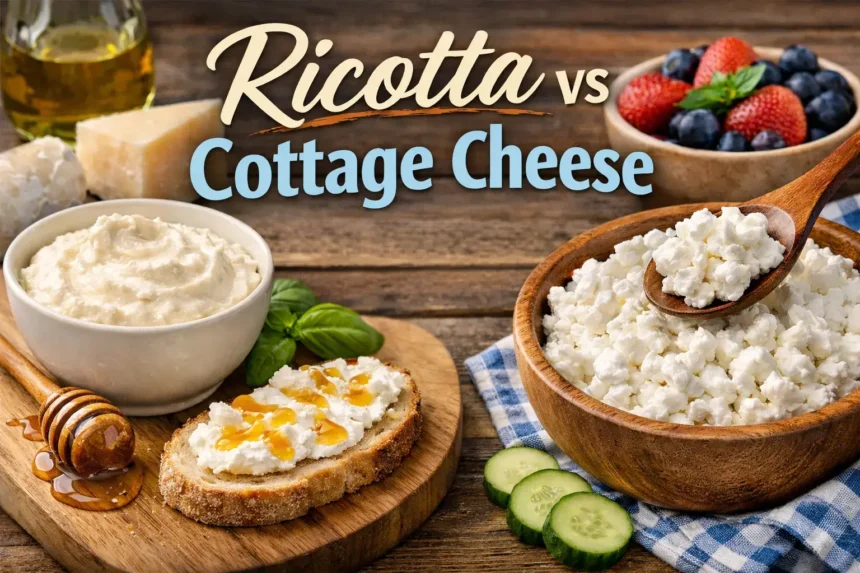
When browsing the dairy aisle, you’ve likely noticed ricotta and cottage cheese sitting close together, both white, creamy, and used in similar types of recipes. It’s no wonder many people assume they are interchangeable. But while they share similarities, these two cheeses differ in flavour, texture, nutritional makeup, and culinary purpose.
Whether you’re trying to make the perfect lasagna, follow a high-protein diet, or simply find a delicious spread for breakfast toast, understanding the difference can help you make the best choice for your needs. In this detailed guide, we’ll break down Ricotta vs Cottage Cheese to help you choose the right one every time.
What is Ricotta?
Ricotta has strong Italian roots and is traditionally associated with dishes like lasagna, manicotti, ravioli, and sweet desserts such as cannoli. The word “ricotta” means “recooked” in Italian, referring to how the cheese is produced.
How Ricotta Is Made
Traditionally, ricotta is made from the whey left over after making other cheeses, like mozzarella or provolone. The whey is reheated, causing remaining proteins to form fine curds. Modern commercial ricotta often mixes whey with some whole milk to create a richer flavor.
Taste and Texture
- Smooth and creamy
- Fine, small curds
- Mild, slightly sweet flavor
Ricotta spreads easily and blends beautifully into both savory and sweet recipes. When heated, it stays soft and creamy, a big reason it’s a staple in pasta dishes and baked goods.
Popular Uses for Ricotta
- Lasagna layers
- Stuffed shells and ravioli filling
- Cheesecake and Italian pastries
- Ricotta toast with honey or fruit
- Whipped ricotta dips and spreads
Ricotta is truly a culinary multitasker, especially in Italian cooking.
What is Cottage Cheese?
Cottage cheese offers a completely different heritage and purpose. It became especially popular in the U.S. during the mid-20th century as a health and diet-friendly food.
How Cottage Cheese Is Made
Cottage cheese is created directly from curdling milk with an acid or rennet. Once curds form, they are drained but not pressed, keeping moisture and whey content high. Salt or cream may be added for flavor and richness.
It comes in various curd sizes:
- Small-curd
- Medium-curd
- Large-curd
You’ll also find versions ranging from fat-free to whole-milk cottage cheese.
Taste and Texture
- Chunky curds
- Mildly salty and tangy flavor
- Juicy, lumpy texture
It’s often enjoyed as a high-protein snack, a breakfast staple, or mixed into salads and smoothies.
Popular Uses for Cottage Cheese
- Topped with fruit or vegetables
- Added to smoothie bowls
- Mixed into scrambles or casseroles
- Used as a low-fat cheese substitute in various recipes
- Spread on toast or crackers for a quick snack
This cheese is especially loved among fitness-focused lifestyles.
Ricotta vs Cottage Cheese: Key Differences at a Glance
| Feature | Ricotta | Cottage Cheese |
| Texture | Soft, creamy, fine curds | Chunky, lumpy curds |
| Flavor | Slightly sweet | Tangy & slightly salty |
| How It’s Made | From reheated whey proteins | Directly from curdled milk |
| Best Uses | Pasta fillings, desserts, spreads | Snacking, salads, breakfast |
| Protein | High | Higher (especially low-fat varieties) |
| Fat | Varies but often higher | Available in low-fat & fat-free |
| Salt Content | Usually lower | Typically more salty |
| Heating Behavior | Creamy when baked | Curds remain separate & chewy |
– Quick takeaway: Ricotta is creamier and better for cooking, while cottage cheese is chunkier and often preferred as a healthy snack.
Nutritional Comparison
Both cheeses are nutritious, but cottage cheese is often considered more protein-dense, especially in reduced-fat varieties.
Below is a typical comparison per 1/2 cup serving (values can vary by brand):
| Nutrient | Ricotta (Whole Milk) | Cottage Cheese (Low-fat 1–2%) |
| Calories | 180–220 | 90–120 |
| Protein | 12–14 g | 15–20 g |
| Fat | 12–16 g | 2–5 g |
| Carbs | 6–10 g | 3–6 g |
| Calcium | High | Moderate |
| Sodium | Lower | Higher |
Best for…
- Building Muscle: Cottage cheese (higher protein)
- Low-fat diets: Cottage cheese (plenty of low-fat options)
- Bone health: Ricotta (more calcium)
- Low-sodium diets: Ricotta (less added salt)
- Desserts and creamy dishes: Ricotta
Both are excellent sources of B vitamins and beneficial dairy proteins. However, if you’re lactose-sensitive, you may find cottage cheese harder to digest because of its whey content. Ricotta, which contains more casein, may be gentler for some.
Also Read – Ovestæ
Culinary Uses: Can They Be Substituted?
Ricotta Shines In:
- Italian pasta (lasagna, baked ziti)
- Desserts like cannoli and ricotta cheesecake
- Creamy dips and whipped spreads
Ricotta’s smoothness allows it to blend into batters and fillings without changing texture.
Cottage Cheese Works Great For:
- Protein-packed breakfasts
- Salads and bowls
- Healthy snacks
- Savory toppings
It holds its shape and texture even when heated.
Substitution Tips
Yes, you can substitute them, but there’s a trick:
| To Replace… | Do This: |
| Ricotta with Cottage Cheese | Blend cottage cheese to smooth before using in baked dishes |
| Cottage Cheese with Ricotta | Use ricotta in salads/savory dishes only if seasoning added |
Example: In lasagna, cottage cheese may make layers slightly more watery and textured, while ricotta gives that classic creamy Italian finish.
Texture and Flavor Differences
This is one of the clearest ways to tell them apart:
| Category | Ricotta | Cottage Cheese |
| Texture | Silky, spreadable | Chunky, curdy |
| Flavor | Lightly sweet and milky | Tangier, saltier |
| Mouthfeel | Smooth | Chewy curds |
When heated:
- Ricotta melts into creamy softness
- Cottage cheese curds stay distinct and may become rubbery
This contrast is why Italian cuisine almost exclusively prefers ricotta in cooked dishes.
Which One Is Healthier?
“Healthy” depends on your goals:
- Weight loss or high-protein diets: Cottage cheese
- Creamier, less processed option: Ricotta
- Low sodium: Ricotta
- Keto or low-carb: Both work
- More whole-food texture: Ricotta
- Budget-friendly: Cottage cheese
Lactose-intolerant people may also find that whole-milk ricotta is easier to digest than cottage cheese due to lower whey content.
Price, Availability & Shelf Life
Both cheeses are easy to find in most grocery stores.
| Category | Ricotta | Cottage Cheese |
| Cost | Slightly higher | Budget-friendly |
| Shelf Life After Opening | 5–7 days | 7–10 days |
| Package Options | Mostly small tubs | Many sizes & types |
Cottage cheese is often cheaper and available in more variations (curd size, fat level). Ricotta typically comes in fewer forms but is widely sold due to its popularity in cooking.
Final Verdict
So, Ricotta vs Cottage Cheese – which should you pick?
It depends entirely on what you’re making and what your dietary goals look like:
Choose Ricotta if you want:
- A silky, creamy texture
- Authentic Italian flavor in cooked dishes
- A more indulgent spread or dessert filling
Choose Cottage Cheese if you want:
- A protein-rich snack or meal
- A low-fat or weight-loss-friendly option
- Something tangy for salads and savory recipes
– Quick rule of thumb:
Ricotta = cooking & baking
Cottage cheese = snacking & meal-prep
If needed, you can substitute one for the other, just expect a noticeable difference in taste and texture.
Final Thoughts
While they may look alike, ricotta and cottage cheese play very different roles in the kitchen. Understanding their differences helps you choose the right cheese for your taste buds, your meal, and your health goals.
Whether you’re baking a homemade lasagna or simply searching for a nutritious breakfast, the right cheese can elevate your meal from ordinary to outstanding. Now that you know more about the battle of Ricotta vs Cottage Cheese, you’re ready to make the perfect choice!
FAQs
1. Can you replace ricotta with cottage cheese in lasagna?
Yes, blend the cottage cheese first for a smoother texture. It will taste slightly tangier and less creamy.
2. Which is better for a high-protein diet?
Cottage cheese usually wins due to higher protein and lower calories.
3. Is cottage cheese just a low-fat ricotta?
No, they’re made differently and have distinct textures and flavors.
4. Are both gluten-free?
Yes, both cheeses are naturally gluten-free, though always check labels for additives.
5. Which cheese is better for dessert recipes?
Ricotta is preferred because of its sweeter flavor and smooth consistency.