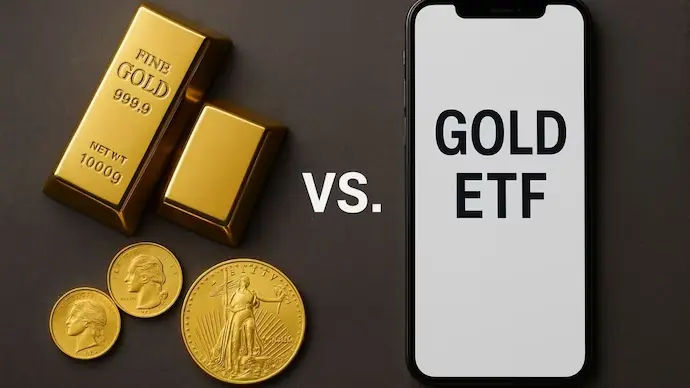
For decades, gold has been a preferred investment for Indian households. While earlier generations preferred buying coins or jewellery, today’s small investors are more likely to buy digital gold or trade in gold ETFs easily. Both these ways are efficient, easy, and transparent. The suitability of these options depends on every individual’s goals, budget, and comfort with financial tools.
What Is Digital Gold?
Digital gold refers to an online investment in gold without requiring the buyer to handle the physical metal. Once purchased, the equivalent gold is stored in insured vaults, and investors can redeem their holdings at any time, either as cash or as physical gold, such as coins or jewellery.
Several platforms allow users to buy as little as INR 10 worth of 24-carat gold while providing live market prices, bringing transparency and helping small investors feel connected to real-time gold markets.
What Are Gold ETFs?
Gold ETFs are investment products that can be bought and sold on the stock market, similar to shares. Instead of holding physical gold, the investor owns units that reflect the price of real gold stored safely by a trusted custodian.
To purchase a gold ETF, an individual needs a demat account or trading account. Because these products are regulated and usually have lower charges, gold ETFs are often considered a cost-effective option for long-term gold investing.
The Core Differences Between Digital Gold and Gold ETFs
Both digital gold and gold ETFs enable investment in gold without physically owning it, but they operate differently.
| Feature | Digital Gold | Gold ETFs |
| Ownership Type | Investors own actual gold stored in secure vaults | Investors own units that track gold prices |
| Minimum Investment | As low as INR 10 | One unit (roughly equal to 1 gram of gold, depending on the ETF) |
| Mode of Purchase | Direct via apps or fintech platforms | Through stock exchanges via a demat account |
| Liquidity | High. Redeemable 24×7 in cash or physical gold | High during trading hours. Proceeds get credited to the account |
| Storage & Security | Stored by the provider; insured and verified | Held by ETF custodian via fund house |
| Regulation | Backed by reputed vaulting partners | Regulated by SEBI and traded on recognised exchanges |
| Conversion Option | Can redeem for coins/bars | Can only sell in the market; no physical redemption |
Suitability of Investment
The choice between digital gold and gold ETFs varies based on investment needs. The factors below help determine alignment with specific financial preferences and approaches.
For Digital Gold
Digital gold tends to appeal to a range of investors, including those who:
- Want to invest in very small amounts: With a minimum of INR 10, digital gold is ideal for building exposure gradually.
- Value redemption into physical gold: Suitable for those who intend to buy jewellery or coins in the future.
- Prefer convenience and simplicity: Transactions are app-based, requiring no broker or demat account.
For Gold ETFs
Gold ETFs may attract investors who:
- Plan to hold for the long term: Lower cost ratios and a regulated structure make ETFs more efficient over the years.
- Prioritise regulatory safety: ETFs provide stronger investor protection under securities regulation.
- Prefer cost transparency: ETFs disclose all fees clearly, unlike some platforms that embed hidden costs.
Risks and Things to Keep in Mind
While both formats are convenient, neither is fully risk-free. Digital gold isn’t yet directly regulated by SEBI, though many providers partner with reputed vaulting agencies and insurers.
- Gold ETFs are regulated, but like any market instrument, their price can fluctuate slightly due to market timing or liquidity. There’s also a small cost attached to brokerage and maintenance.
- The investors can allocate 10 to 15% of a portfolio to digital gold to maintain balance and stability.
- Many investors use both options, building small savings through digital gold and later shifting larger amounts into ETFs for long-term holding. This approach combines convenience with regulation, making digital gold a useful gateway for new investors before they move into more formal market products.
Platforms like the JioFinance app bring both savings and investment tools under one digital platform, making this progression seamless.
Conclusion
For small investors, the choice between digital gold and gold ETFs depends on priorities such as convenience, regulation, cost, and long-term goals. The suitability depends on the investor’s financial goals, investment horizon, and comfort with regulatory structure. Many investors find that using a mix of both options helps balance accessibility with long-term stability, creating a well-rounded approach to gold investing.
Disclaimer: Gold investment values fluctuate with market prices. Investors are advised to review the terms and conditions carefully before purchasing. T&Cs apply.
Also Read – investiit.com stocks